


The number of tattoo studios on the high street has more than doubled in the last ten years. And it's now estimated that nearly a third of all adults in the UK have a tattoo.
It's a £700m market that's ripe for the picking...but one that's not without its own rules and regs.
To stay compliant and lawful, it’s essential to know your way around UK tattoo licence requirements.
So, here are some handy FAQs for freelance tattoo artists and tattoo studio owners. From how to apply for a tattoo licence to what requirements you need to know about.
What are the UK’s tattoo laws and regulations?
Unless you happen to be a registered healthcare professional (and therefore already regulated), it’s illegal to tattoo someone – or advertise your services as a tattooist – without getting a licence from the council first.
It’s also illegal to tattoo anyone under-18, full stop. Anyone caught tattooing a minor for anything other than medical reasons risks being fined and prosecuted, and having their licence revoked.
It simply isn’t a risk worth taking.
How do you get a tattoo licence in the UK?
Whether you're a solo artist practicing from home or plan on opening up your own commercial tattoo parlour, you'll have to register both yourself and your premises with the local council.
You can track down your coucil's contact info using Gov.uk’s post code checker. Then submit your application to them online or through the post.
There are extra requirements with some tattoo licences and the process can look different depending on which council you're applying with.
For example, if you plan on working in one of the Greater London boroughs (ie outside of the City of London), you’ll have to apply for a ‘special treatments licence' – covering you for tattoos, massage, laser, and a range of other treatments.
And if you’re applying for the special treatments licence in person or via post, you’ll need to send a copy of your application to the Metropolitan Police and the London Fire and Emergency Planning Authority. (You don’t need to do anything if you're applying online.)
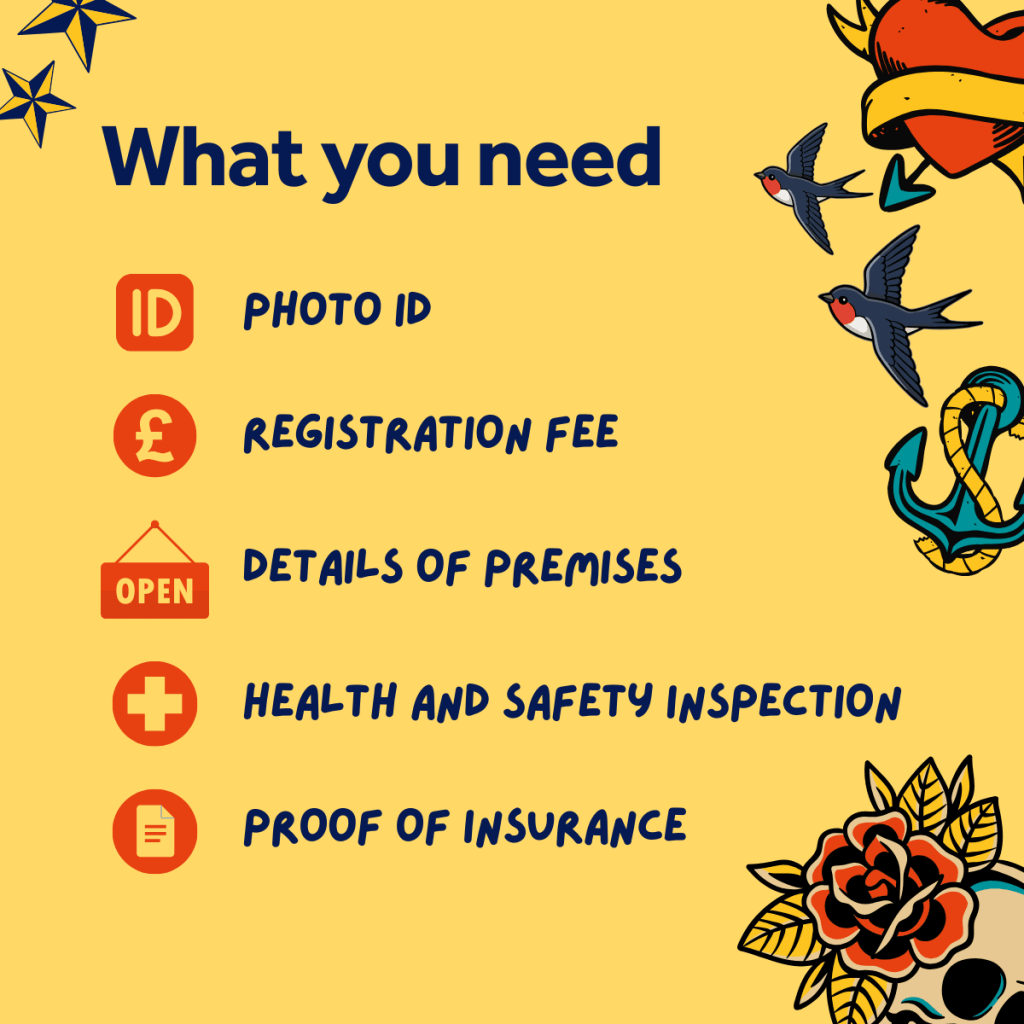
Whichever council you apply to, you’ll have to prove you are who you say you are. Again, exact requirements vary, but at the very least, you’ll need to send in a photo ID and some proof of insurance.
Do tattoo licenses cover body piercing too?
Most tattoo licences will also cover cosmetic piercing (defined as piercing any part of the body, including the ear).
That's because both tattoo and ear piercing treatments have the same licence requirements in the UK. Such as clean premises, sterile equipment, and good hygience practices.
Note that if you’re planning on piercing away from your studio, you’ll still need to apply for a personal licence on top of the premises one.
Are there any other requirements for getting a UK tattoo licence?
To receive your registration certificate – the official document which proves you're fully licensed – you may need to pay a one-off fee to the council. You'll also need to prepare your premises for inspection.
This inspection will usually take place soon after you’ve submitted your application. To give yourself plenty of time, you should educate yourself on any local bylaws and health and safety standards before you apply. These vary from council to council and can be extensive.
This toolkit from the Chartered Institute of Environment Health (CIEH) has plenty of guidance. It sets out the standards of practice for most tattoo artists in England and Wales – including tips on personal hygience and hand washing, infection control, cleaning and sterilising of equipment, personal protective equipment (PPE), sharp tools management, and more.
How often should I renew my tattoo licence?
On passing your inspection and receiving your licence, you'll generally be registered for as long as your premises don't change.
The exception is if you’re based in London, where you need to renew your licence roughly every 18 months. This varies by area, though, so be sure to check with your council when you apply.
Where do I display my tattoo license?
You should hang your registration certificate up somewhere obvious...ideally, so your customers can see it as soon as they enter your studio. Fail to display a valid licence and you can get fined by up to £500.
As well as being a legal requirement in the UK, having a tattoo licence shows that:
- You run your tattoo business from safe, licensed premises.
- You and your staff are aware of and comply with local hygiene and cleanliness bylaws.
Can I tattoo customers away from my studio?
Tattooing away from the premises where you’re licensed is illegal. And for very good reason.
There's no guarantee you can maintain the same standards of hygience and cleanliness away from your studio. There may also be trip hazards lying around which could endanger both you and your customers.
However, that doesn’t mean you can’t visit trade events...or even tattoo at them so long you're set up with your own licensed mobile studio.
You should check the rules beforehand with the event venue. And remember you can still end up accidentally hurting someone or damaging their property even if all you're doing is mingling...we'd always recommend checking with your insurer to see if your public liability insurance covers you at events.
If you're planning on taking some kit with you, you might want to add on contents insurance too. This will protect it if it's damaged, lost, or stolen while you're there.
Does having a tattoo licence prove that I’m insured?
Displaying a copy of your tattoo licence demonstrates you’re practicing in a way that’s legal and compliant with UK tattoo requirements.
By tattooing in safe, hygienic surroundings, you’re protecting yourself, your staff, and your customers from localised skin infections and more dangerous, blood-borne diseases such as HIV, AIDS, and hepatitis.
And while having a tattoo licence isn’t firm proof of being insured (only an insurance certificate can do that), you’ll very likely need to have some before you can become licensed to carry out tattoos.
What insurance do I need for my tattoo studio?
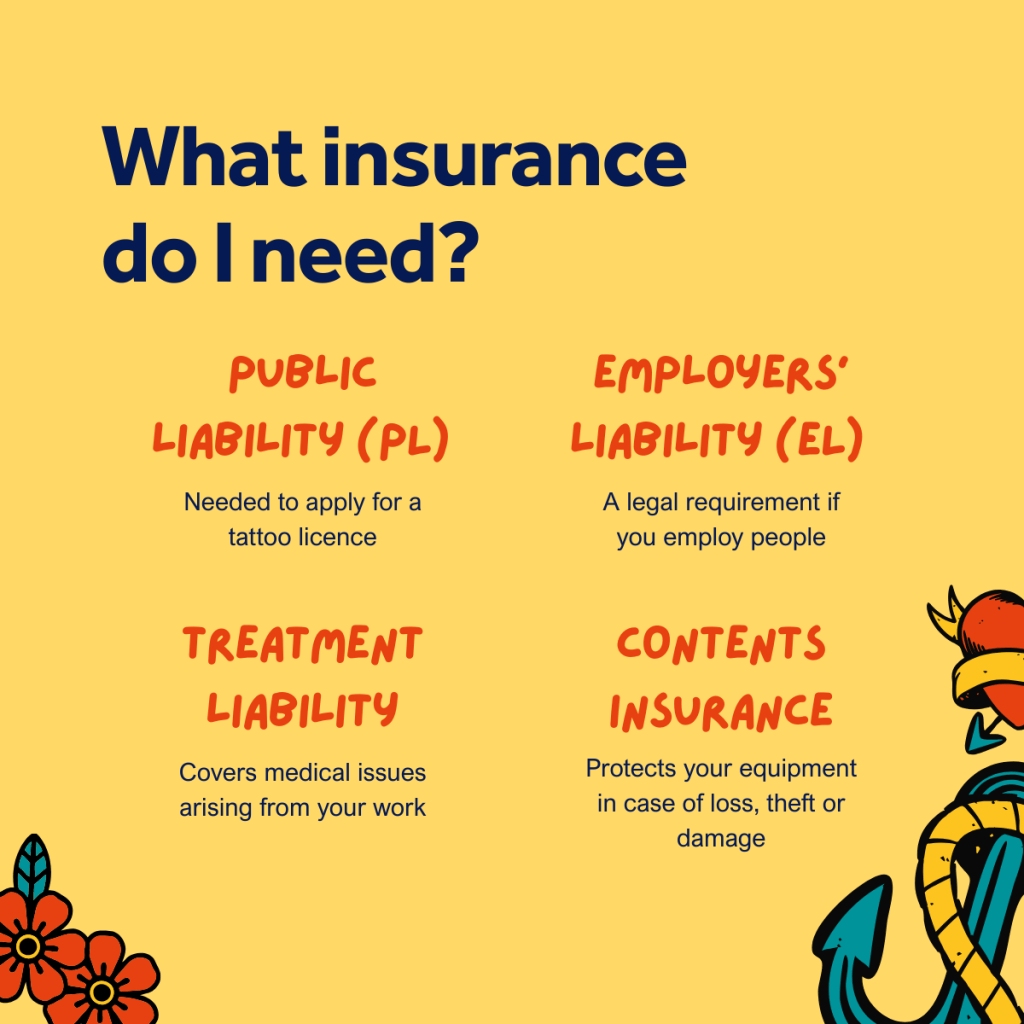
Most local councils ask for proof of public liability (PL) insurance when you apply for your tattoo licence. This is to ensure you can cover any accidental injury or damage you cause to clients and/or their property while they’re on your premises.
If you employ staff, you'll need employers' liability (EL) insurance by law. There's no getting around this requirement, and you can get fined up to £2,500 a day for operating without it.
PL and EL are generally the two types of tattoo insurance most tattoo studios need.
However, we’d also strongly recommend treatment liability insurance to cover you for medical issues arising from your work (think infections, allergic reactions, and skin damage, and the potential cost of covering these types of claims without any insurance.)
You might also want to insure your equipment with contents insurance. This covers it for any incidents of loss, theft, and damage. And means that if something happens to it – either at or away from your studio or whilst travelling to/from it – you won’t be left struggling to replace it.
Think before you ink
Getting your tattoo insurance sorted doesn’t have to be a faff. It really just boils down to two things: knowing your local council’s requirements, and what else you need to secure your customers’ safety (and your own peace of mind).
Have more questions about how to protect your tattoo business with the right insurance? Just give our team of experts a call on 0345 216 0027.
Images ©PolicyBee 2025
aestheticsmedical malpracticerules and regulationsrunning a businesstreatment & professional liability